
Three additional vehicle makers and five more auto component makers will begin availing financial incentives under the production-linked incentive (PLI) scheme for the automobile sector from 2026-27 (FY27) onwards, Hanif Qureshi, additional secretary at the Ministry of Heavy Industries (MHI), said on Wednesday.

IPO-bound mobility platform Ola, said it has successfully raised $500 million via a Term Loan B (TLB) from marquee international institutional investors. This term loan has no impact on the valuation of Bhavish Aggarwal-led Ola. The Bengaluru-based firm recently raised $139 million. This is part of a $1 billion funding round for which the company is in talks with investors, increasing its valuation to about $7.5 billion, according to the sources.

Ola co-founder Bhavish Aggarwal on Thursday said Ola Electric sold scooters worth over Rs 600 crore on the first day of the sale of its model S1. The executive noted that the company will shut the purchasing process from Thursday midnight. Ola Electric had on Wednesday commenced the sale process of its electric scooter, which comes in two trims - Ola S1 and S1 Pro.
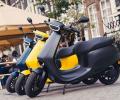
Even though electric two wheeler (e2W) companies saw a slight recovery in July of 12 per cent with 49,518 registrations - after a wash out in June because the government slashed the FAME 2 subsidy by a third - registrations are still lower for the second month in a row compared to April FY24. The slow pace has raised doubts about whether the registrations will reach anywhere near either Niti Aayog's ambitious target of 2.4 million vehicles in FY24 or whether they will be closer to the trimmed down industry expectation of around one million. In June, e2W registrations plunged to a mere 44,253, the worst month in more than a year, as companies hiked scooter prices.

Kerala has overtaken more industrialised states in personal electric vehicle adoption, driven by strong middle-class uptake, policy support, and charging infrastructure.

SoftBank-backed Ola Electric took the wraps off its maiden e-scooter offerings -- Ola S1 and S1 Pro -- for a commercial launch on Sunday. With prices starting from Rs 99,999 (excluding state government incentives, registration fee, and insurance cost), the Bhavesh Aggarwal-founded firm said the e-scooters are designed and engineered in India for the world and will deliver the best scooter experience to the consumer. He suggested that after 2025, sale of petrol-powered two-wheelers should not be allowed.
Ola Electric on Thursday said it will bring its electric scooter to the Indian market in July this year, and is working on setting up a 'Hypercharger Network' to include one lakh charging points across 400 cities. Last year, Ola had announced a Rs 2,400 crore investment for setting up its first electric scooter factory in Tamil Nadu. Upon completion, the factory will create nearly 10,000 jobs and will be the world's largest scooter manufacturing facility that will initially have an annual capacity of 2 million units.

Bhavish Aggarwal, the founder of ride-hailing firm Ola who disrupted the electric scooters market in the country, is planning to launch an electric sports car in 2024. The plan will put it in competition with Indian players, such as the Tata group and Mahindra & Mahindra, and global giants like Tesla and Hyundai. Aggarwal, recently, took a group of reporters to the firm's design studio at the Ola campus in Bengaluru where his teams are working on several EVs, including scooters, motorcycles, sedans, and SUVs - and even robotaxis.

Stung by the government's punitive action on electric two-wheelers, registrations in April fell by nearly a fourth to 62,581 from 82,292 in March, according to data from VAHAN. Electric two-wheeler companies, including Okinawa, Hero Electric, Ather Energy, and TVS, have all clocked their lowest registrations in the four months of this calendar year. Ola Electric has been the only exception to this bloodbath, and has crossed its March numbers, hitting 21,560 registrations in April, which is its highest in this calendar year. As a result, there have been some interesting changes in the electric two-wheeler pecking order.
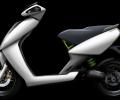
Bengaluru-headquartered electric two-wheeler manufacturer Ather Energy is all set to file its draft red herring prospectus within the second week of September to the Securities Exchange Board of India (Sebi) for its maiden initial public offering (IPO), in which it is expected to raise over $450 million. On Tuesday, the fourth-largest electric two-wheeler maker in the country by volume raised Rs 600 crore from its existing investor, the National Investment and Infrastructure Fund (NIIF), catapulting itself into a unicorn with a valuation of $1.3 billion.
Even as India overtakes Japan in automotive sales in 2022, moving to third place for the first time, oddly enough the country's biggest motor show is going to see some big hitters give it a clear miss. Some prominent automotive brands have cited high event costs, negligible returns on investment, poor event management, and unfavourable location as reasons for their reluctance to participate. Major pure-play electric two-wheelers, too, are riding past this year's edition of the Auto Expo.

RIL subsidiary Reliance New Energy Solar, Ola Electric, Hyundai Global Motors Company and Rajesh Exports have been approved for receiving incentives under the Rs 18,100 crore Production Linked Incentive (PLI) scheme for battery manufacturing in India, sources said on Thursday. "The ministry had received bids from 10 companies with a capacity of 130 GWh. Reliance, Ola Electric, Hyundai and Rajesh Exports have qualified for ACC batteries," a source said. Other companies which had applied for the PLI scheme for Advanced Chemistry Cell (ACC) batteries were Lucas-TVS, Mahindra & Mahindra, Amara Raja Batteries, Exide Industries, Larsen & Toubro and India Power Corporation Limited.
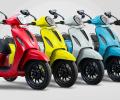
The country's legacy two-wheeler giants - Bajaj Auto and TVS - are fighting a neck-and-neck battle for market share, with the former threatening to dislodging its rival soon. The Pune-based giant, which was trailing far behind TVS just two months ago in e-two-wheelers (e2Ws), has upped the ante. It has increased its market share based on Vahan registrations from 11.6 per cent in June (when it sold only 9,046 electric two wheelers) to 19.3 per cent (when it sold 14,977 this month till August 30).

Ola Electric became the latest among electric scooter (e-scooter) makers to have started the exercise of recalling a specific batch of its model after a rap on the knuckles by the government. Union Minister of Road Transport & Highways Nitin Gadkari on Thursday advised electric vehicle (EV) companies to act responsibly by identifying and recalling defective batches without waiting for orders or guidelines from the ministry. The Bengaluru-based start-up is conducting pre-emptive diagnostics and health check on 1,441 scooters, it said in a statement on Sunday.
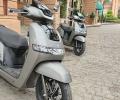
Hero MotoCorp and TVS Motor crossed Rs 1,000 crore in R&D spend for the first time, as legacy OEMs accelerate innovation to compete with new-age EV players.
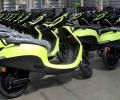
From premium electric motorcycles to mass-market scooters, manufacturers are rapidly expanding their portfolios to capture a larger share of the booming market.

India's 25 venture capital and private equity backed "new-age" companies, that listed between May 2020 and June 2025, reveals a sobering reality behind the hype: barely a third have delivered sustained outperformance against the market.

Yamaha expects its first EVs to hit showrooms by the last quarter of FY26 (January - March), once network readiness is complete.

Gautam Adani emphasised the importance of energy security and digital infrastructure in shaping geopolitical power, urging India to develop sovereign capabilities across the AI value chain.

Retail sales of electric passenger vehicles (ePVs) nearly doubled in July 2025, surging 93 per cent year-on-year (Y-o-Y) to 15,528 units, even as overall passenger vehicle (PV) retail volumes declined marginally. In contrast, electric two-wheeler (e2W) sales dropped by 4.3 per cent to 102,973 units, according to the Federation of Automobile Dealers Associations (Fada) data.
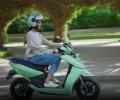
Electric two-wheeler (e2W) maker Ather Energy has submitted preliminary papers to the Securities and Exchange Board of India to raise funds through an initial public offering (IPO). According to the draft red herring prospectus (DRHP), the IPO will comprise a fresh issue of equity shares valued at Rs 3,100 crore, alongside an offer for sale of 22 million equity shares by its promoters and investor shareholders.

Over 50 per cent, or 660 stocks, from the BSE 1000 index recorded negative returns during CY25.

Among Sensex firms, Bharat Electronics, Eternal, Mahindra & Mahindra, Kotak Mahindra Bank, Tata Motors and Power Grid were the gainers. However, Adani Ports, ITC, UltraTech Cement and Titan were among the laggards.
The production-linked incentive (PLI) scheme for the automobile sector has created market distortions, excluded innovation-led electric two-wheeler (e2w) makers, and failed to convert cost advantages into export competitiveness, with 77 per cent of export volumes driven by non-PLI models, said a report released by the Centre for Domestic Economy Policy Research (C-DEP) on Friday.

More than 30 technology startups, collectively valued at $100 billion, are poised to go public by 2027, signalling a potential rebound in India's stock market activity, according to a report by investment bank The Rainmaker Group. Walmart-owned Flipkart, financial technology (fintech) leader PhonePe, SoftBank-backed Lenskart, Razorpay, Zetwerk, and Meesho are among the top companies preparing to go public in India.

From Tetley Tea to Jaguar Land Rover and Air India, Ratan Tata has ticked off almost every item on his bucket list. However, one that remains unfinished is the electric version of his small car, the Tata Nano. A concept entrusted to Coimbatore-based Jayem Automotives (Jayem Auto) is still on the shelves, despite nearly 400 cars being launched, primarily due to Covid-19 and new crash norms.
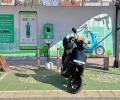
Leading Indian electric two-wheeler (e2W) companies have said that "swapping" of batteries is currently unviable and will only increase the cost for a consumer to run the vehicle.

Mobility company Ola's chief financial officer Swayam Saurabh and chief operating officer Gaurav Porwal are leaving the company. These developments come at a time when the SoftBank-backed company's core ride-hailing unit is planning to go public and for which it raised $500 million from Warburg Pincus and Temasek in July this year. These investment firms had partnered with the company founder Bhavish Aggarwal for this round.

GSM, which is potentially eyeing a Hong Kong listing and was recently valued at $20 billion, operates on a distinct model -- it owns the e-taxis and employs the drivers, while also supplying cars to independent drivers or fleet operators.

By 2025, Uber projects that 25,000-30,000 cars -- or 12 to 16 per cent of vehicle additions -- would be EVs, reports Surajeet Das Gupta.

In light of the recent incidents involving scooters from prominent electric mobility brands bursting into flames, the subject of electric vehicle (EV) safety has come under the spotlight. As many as 20 electric scooters of Nashik-based Jitendra EV Tech caught fire after being loaded on a transport container. While no one has been reported injured, the company said it is conducting an investigation to find the 'root cause' of the fire.
Four companies - Rajesh Exports, Hyundai Global Motors Company, Ola Electric Mobility and Reliance New Energy - are eligible for receiving benefits under the production-linked incentive (PLI) scheme for advanced chemistry cell battery storage, the heavy industries ministry said on Thursday. The allotment was made for a total of 50 GWh of battery capacity to the four successful bidders. These firms, the ministry said, will receive incentives under India's Rs 18,100 crore programme to boost local battery cell production.

This comes at a time when Ola is looking to replicate nationally the success of its auto-rickshaw offering in Chennai and Bengaluru.

Nearly a decade ago, the first fully electric vehicle (EV) caught fire on the road in the US. It was a model from Tesla, the world's most admired EV maker. A metal fragment punctured the underbelly of the vehicle, penetrating its battery pack, leading to a fire. Indian lawmakers and automakers have had nine years to study the incident (in fact, three Tesla Model Ss caught fire in two months in 2013) but seem to have learnt little.
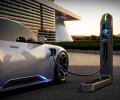
With a million-odd electric vehicles (EVs) - two-wheelers, e-rickshaws, buses and passenger cars - expected to hit the road this calendar year, the shift from gasoline-powered vehicles has become irreversible. Now the question is whether the supply chain is ready for this shift. Key components - the high-powered lithium-ion battery and the cells which go with it, the electric motor, and the electronics powered by chips - account for nearly 60 per cent of the cost of an EV.

With just a month left in this financial year, electric two-wheeler sales, so far, are at just 62 per cent of the ambitious target of 1 million units set for 2022-23 by the NITI Aayog. According to VAHAN data, compiled by the Society of Manufacturers of Electric Vehicles (SMEV), 620,006 units of electric two-wheelers were sold across the country in FY23 until February 21. Though the industry may miss the 1-million target, sales in FY23 are already up 146 per cent from 249,621 units sold in FY22.
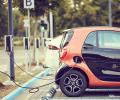
Lithium-ion cells, primarily imported from China, are likely to become cheaper following punitive tariffs imposed by the US on Chinese battery cells.
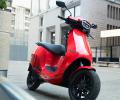
The government-appointed expert committee, which probes incidents of Ola Electric's S1 Pro and Okinawa vehicles catching fires, has added the latest case of fire involving PureEV electric scooter to its investigation, a senior government official told Business Standard. "A team comprising experts from Indian Institute of Science (IISC) and Centre for Fire, Explosive and Environment Safety (CFEES) are investigating the cases. "As soon as the report is submitted, we shall take appropriate action," said Giridhar Aramane, secretary at the ministry of road transport and highways.
Ola Electric will roll out its complete offering of electric scooters and motorcycles in each segment of the market - premium, mass premium, and economical - in the next 12 months in a bid to push for a near-full conversion of the two-wheeler market to electric in three years. According to Bhavish Aggarwal, founder and CEO of Ola Electric, "ICE (internal combustion engine) products will fall off a cliff." He also says the company is aiming to become profitable next year.
